Navigation

Sunday, January 3, 2021

Thoughts on books: isolation, loneliness, and perception

I finished three books during the last two weeks of 2020: The Midnight Library, Where the Crawdads Sing, and Eleanor Oliphant is completely fine. Loneliness, isolation, and the feeling that those around us do not understand us, are common themes among the three books. I enjoyed all three to varying extents, my favorite being Eleanor Oliphant's story.

The Midnight Library by Matt Haig

While Nora's story in The Midnight Library conveyed a similar message, I found the plot rather predictable. However, there are still some nuggets of wisdom, which also felt like snippets of tweets I would expect from Matt Haig (a form of storytelling that doesn't create long-lasting character impressions for me). My favorite tweet-able lines from the novel:

The only way to learn is to live.

Doing one thing differently is often the same as doing everything differently

You will never live if you are looking for the meaning of life.  

You will never live if you are looking for the meaning of life.

It seems that many of us, especially my peers of the same generation, are always searching for meaning and purpose in our lives. Nora's story reminds us that by living our lives, we are already creating meaning and purpose in our every moment and action. Meaning and purpose is not something that we have to define clearly for ourselves, but rather is something that is always in our presence. We may not always see it there. 

I still consider Matt Haig's The Humans is one of my all-time favorite novels, though The Midnight Library didn't quite strike the same chord within me.


Where the Crawdads Sing
by Delia Owens 

I am still digesting this book as the ending has me rather perplexed. Kya's story reminded me that people are complex, there is no such thing as black-and-white as right-or-wrong, and that we all make choices that are ultimately rooted in survival. I rooted for Kya throughout the book because I see the pain she endured, the trauma, and the expectation of abandonment from those that are supposed to love her. Yet, Kya's pain (which I wish upon no one) is exactly what allows her to grow in ways that I admire. A contradiction of how life itself unfolds, I suppose. Despite her insistence that relying on others results in hurt, Kya's survival and growth was also inherently connected to others: Tate, who taught her how to read; Jumpin, who treated her like his own daughter; and Mabel, who was Kya's only female role model growing up. 

Perhaps Kya's story also reminds us that while we may think we cannot need others in our life for fear of pain and hurt, there are always those who built us up to who we are today that we may not consciously acknowledge.


Eleanor Oliphant is completely fine by Gail Honeyman

For the past week, I kept wondering why I am so intrigued by Eleanor Oliphant. When I read the first chapter, I sometimes found myself wishing that I could be a bit more in how she accepts the blatant realities of her life, clearheaded on the parts that don't make sense yet not accepted much by the negativity and perceived-stupidity of all that surrounds her. In some ways, I envied her way of thinking, minus her life-plan with the musician, which I perceived as coming from a place of fear and trauma. There is contemplation on the internet regarding Eleanor as being neurodivergent, which is not discussed explicitly in the book.

Gail Honeyman wanted to tell the story that stemmed from the lived experience of loneliness; how a young person "may not speak to another person from leaving the office on Friday night until returning on Monday morning. That this is possible when someone moves to a new city, rents a one-bedroom apartment, takes a new job where she has little in common with her colleagues..."

Eleanor's life is mostly isolated until she meets her new coworker, an emotionally intelligent Raymond. Gail Honeyman described him as the everyday good guy that is often left out of so many stories. 

I will leave you with this thought from Eleanor when she is at a social gathering, which is worthy of reflection as we move into 2021:

All of the people in the room seemed to take so much for granted: that they would be invited to social events, that they would have friends and family to talk to, that they would fall in love, be loved in return, perhaps create a family of their own. 

Wednesday, April 3, 2019

Arikawa - The Traveling Cat Chronicles

Note: Plot spoilers ahead.

A friend of mine, who is a huge cat-lover despite her alarming cat allergies, once told me that the most admired trait in a cat (that is arguably transferable to the human realm) is that we as humans need to earn their trust in order to be anywhere near them. Any form of stroking or mere poking of a cat is a real privilege.

Thursday, March 21, 2019

"you don't have to choose between being scientific and being compassionate." -Robert Sapolsky

I have been fascinated by the human mind throughout my life. I grew up believing in the trite phrase "mind over matter" was 100% applicable to my struggles. Despite having that level of self-awareness, I was not able to fully peel back the layers behind my enigmatic and often refraining thoughts until I was in my early 20s.

Behave brings both science and humanity to the forefront of civilization, showing both the good and terrible things people are capable of doing. This book is fascinating and informative that it may as well be the "Behavior-Bible-for-nonbiologists." I've been rereading dense sections and critically grapple with how the research and anecdotes reflect the decisions that I make and have made in my own life.

I can reread this book several times and, I bet, digest new information each time. My ultimate takeaway this round: there are countless factors we cannot control which influenced our brain development as children; however, with awareness of all this complexity, we can, through experience and neuroplasticity, change ourselves, and thus change the worldview.

Some ideas and stories that sparked my curiosity:

  • Sustained stress decreases our ability to process new information, therefore creating tendencies to act on old (and probably lousy) habits, as well as conform. It makes me wonder... are there studies that have "measured" chronic stress? 
  • Us/Them-ing is an emotional and automatic reaction that occurs in milliseconds prior to our conscious awareness.
  • Moral intuitions are a result of repeated experience and learning which, overtime, become automatic. Doing the right thing can be the easier thing if we exercise "doing the right thing" enough. 
  • "The peril of empathy isn't simply that it can make us feel bad, but that it can make us feel good, which can in turn encourage us to think of empathy as an end in itself rather than part of a process, a catalyst." In other words, don't let yourself be a feelings sponge and wind up protecting yourself from feeling so strongly that no action is taken.

Given this 700-paged summary of human behavior and the brain, it is evident that the factors which determine our worst behaviors can also be forces for some of our finest behaviors. Armed with this knowledge, I am determined to move forward with even greater self-awareness (although I may never get to the bottom of the truth as to why I harbor certain perceptions, I know I have the capability to be better), and to remember that all the people who offend and hurt me are still fundamentally just like me. We are products of events that occurred prior to our birth, environment, and an abundance of factors out of our control. We simply do what we can in this particular stage of our life. 

Saturday, March 9, 2019

A Eulogy

I've been thinking more about death lately. All living things will die; yet mortality is not something many people work through as they would their diet and exercise regime and clothes they wear to work. This past year has been the greatest year of growth in terms of reflection, self-awareness, and acting on my self-awareness, and I strive to continue leveling up in this realm of my life.

For many eulogy writing prompts online, the prompt tends to say: when I am gone, how would I want people to remember me? But the question I pose is: how would I want to remember myself, if I were taking my very last breaths? It is a very subtle phrasing difference; the former places more emphasis on what others think of me, while the latter is on what I think of me. What fundamentally makes me happy and proud to be Jessica Lin? The train of thoughts continue below...

  • She created peace in her own heart with herself and in her relationships despite the noise and frenzy of the world constantly taking peace away
  • She was present and 500% focused on the situation before her
  • She was an intent listener; others felt heard and seen in her presence 
  • Loving. Thoughtful. 
  • She showed detached empathy (more on detached empathy for another post; the idea is to not be so overwhelmed by emotion in empathy, which I am 100% guilty of, that it results in not being prosocial) 
  • She had strong, kind, and contagiously good energy
  • She was someone who earned things, not someone who took things
  • She was unapologetically herself because she knew. who. she. was.  

I feel so vulnerable and emotional typing this up. I am reminded of the many years I spent in school feeling insecure and lost... seeing other girls in the gym locker room whispering about the way I looked, eating lunch alone because I didn't know how to approach people I wanted to talk to, letting social media dictate my worth, confusion about what I wanted to study in college, the pressure of leading a specific lifestyle that others wanted, questioning purpose and passion, craving acceptance from my peers, beating myself up for stupid things I said and mistakes I made, crying buckets of tears in front of my graduate school advisor because of the overwhelming stress and grad school toxicity, blaming myself for a dishonest ex-boyfriend...

I used to wish that I never had these painful experiences, but now, I wouldn't go back and change a thing. I don't feel shame about my past anymore. It is just so strange to look at what I used to care so much about and compare it to the person I want to remember myself for. I want to develop strong, meaningful relationships. I want to be unshakeable in a society that is slowly taking away the core of people's fundamental goodness. Every living thing on this planet has experienced sunrise and sunset. As the sun sets, all the embarrassment and disappointments with the day sets along with it; the sun reignites and rises the next morning and spreads its rays to remind each of us that we possess the energy to be the best we can be in that moment for that day, and to continue growing with each sunrise.

I really don't care for having conventional "success" or superficially "having it all" on the outside. Knowing and loving your heart, and continuously sharing the energy in your heart... that is the most important.

Thus, I ask myself every night... did you love the person you were today? 

Saturday, February 16, 2019

"Behave": Genes, Environment, and Culture

I'm about halfway through Robert Sapolsky's "Behave", and I find this book fascinating. The witty bounce-off between comical language (especially in the footnotes) and data-backed evidence lightens the heavy topic of complex and downright confusing human behavior.

A topic from "Behave" that I have been perusing is gene-environment interactions, a topic strongly related to the age old debate of nature vs. nurture. How pivotal of a role do our genes play in explaining human behavior and preferences? How much do my genes determine my strong love for pancakes? 

There are two terms here that Sapolsky defines and, as he admits, are highly unintuitive: 
If genes strongly influence average levels of a trait, that trait is strongly inherited. If genes strongly influence the extent of variability around that average level, that trait has high heritability.
Sapolsky gives the example of height variation in a plant species with three gene versions. Version A will grow to be 1 inch tall, B to be 2 inches tall, and C to be 3 inches tall. In this scenario, the differences in height is completely determined by genes, and is thus 100% heritable. However, consider that this plant species always has leaves at the base closest to the roots, with an occasional anomaly of a plant with leaves at the top near the flowers. The trait of low-lying leaves would be highly inherited with low heritability; the genes predict the placement of leaves and don't explain the anomalous difference of leaves growing at the top of the plant.

So what drives differences, and how much of it is actually driven by genetics? I found Sapolsky's point about environment crucial: if you only study the gene in a particular environment, you fail to observe how the gene works in other environments. As expected, genes work differently in different environments. Furthermore, studying the gene in multiple environments decreases the influence of heritability, and suddenly the influence of genes on plant height is less due to genes and more influenced by environment. The actual heritability of a trait is highly context-dependent. Imagine the intricacies of studying human behavior in the context of environment, where there are infinite types of living environments, lifestyles, and traumas.

Related to gene-environment interaction is a topic that I took more personally: collectivist vs. individualist culture (or East Asian and American cultures, respectively). There are three scenarios in the book, which I used to "determine" how "Asian" and "American" I am:

1) Americans are more likely to remember when they influenced someone, while East Asians will remember times when someone influenced them. 
I'm 50-50. I have strong admiration and memories of mentors who have had significant impact on my decisions for my career and path forward, but I have equally strong memories of times when friends and acquaintances would remark on something I did to help them through challenges.

2) Which two go together? A monkey, a bear, and a banana. 
I instinctively said monkey and banana, associating a monkey with eating a banana. According to research, the cultural differences cause Americans to process this situation categorically; the monkey and bear go together since they are animals. East Asians, however, think about the relationship between a monkey and a banana; the monkey will need to eat the banana to nourish its body and survive.

3) When looking at a picture, what do you notice first? The scene or the person in the middle?
I tend to notice the person in the middle of a scene. Generally, Americans will look towards the center of the photo first, while East Asians look holistically at the entire photo.

What I found utterly fascinating is the environmental and ecological influence of rice on collectivism. Rice is the staple of East Asian food, and its harvesting requires extensive cooperation beyond family boundaries to successfully build and maintain rice irrigation systems. Rice harvesting is not a solitary activity. And on the topic of heritability and environment: a gene variant responsible for extroversion and impulsive activity occurs in 23% of Europeans and European Americans, but only 1% in East Asians. Collectivist rice farming societies trended against this variant as rice domestication progressed.

I couldn't help but think about my parents and how their actions strongly reflect collectivism. My mother makes lunch for my father every single day, and it is almost the exact same lunch: romaine lettuce with tomatoes, avocado, mushroom, many other vegetables, an egg, with bagel and oatmeal on the side. She always said it was natural for her to do so and she never had to think twice about putting together a meal for him. My father never complains about the meal, despite it almost being the exact same lunch every day.* I assume this is part of his "collectivist mindset", where he understands that every person contributes to the overall well-being of the family in some way. In turn, he does a lot of the cleaning in the house and likes to maintain garden and plants in the yard, keeping our family's living space clean.

My parents do all that without consciously dividing up tasks. To me, it seems like they naturally fell into those roles because they were aware of the individual contribution needed to create a healthy, communal environment for the family.

Genes, environment, and culture - the interplay among these three must somehow create a unique blueprint for every individual's behavior.


* If it were me, I might have resorted to making my own lunches because the individualist in me wants to take charge of my meals and have something other than nutritious, healthy salads daily.

Wednesday, January 10, 2018

Hunger, by Roxane Gay

I have been silent about my story in a world where people assume they know the why of my body, or any fat body. And now, I am choosing to no longer be silent. I am tracing the story of my body from when I was a carefree young girl who could trust her body and who felt safe in her body, to the moment when that safety was destroyed, to the aftermath that continues even as I try to undo so much of what was done to me.

- Roxane Gay, Hunger


Empathy is lacking in this world, especially in online spaces. The internet has become one of the cruelest and most bigoted places. Anybody can hide behind a computer screen and create an anonymous social media account to harass others. Creators can put up a screen-grabbing thumbnail and garner views with offensive, and insensitive content.

Twitter is an excellent example of an online space where strangers can tweet you vile and insulting things in a couple hundred characters. On YouTube, users can leave paragraphs of rude and hurtful comments.

Roxane Gay is frequently harassed on twitter. People offer her unsolicited weight loss advice, insult her body, and send her condescending tweets.  In Hunger, she chooses to speak up about her body, her insecurities, and her struggle with her identity.

Hunger is a raw and honest story which must have required infinite amounts of courage to even decide to write. Gay says that her life can easily be divided into a before and after of the day she was raped at 12 years old. She perceived her body as weak and unprotected, and believed that the more she ate and the larger she became, the safer she was. She struggles between feeling this protection and feeling devalued in a world of thin privilege. 

Gay reminds us that this society values thinness and rewards it. She writes about her concern with grocery shopping under the public eye, getting bruised from armchairs on planes, and sitting on the edge of her chair and using as little weight as possible during a public interview. She writes about cooking disappointing ravioli from Blue Apron instructions. She writes about how muted she was in describing her hunger to her parents, and how she could not bring herself to show them how broken she felt inside. 

Hunger is a gift to literature. In no way is Gay ever obligated to explain her past and the evolution of her body to the public, but she bravely shares her ongoing struggle with her body and navigating society as a fat woman. 

Sunday, March 29, 2015

The Inner Dilemma of a Coffee-Lover

It's the end of winter quarter 2015, and for the first time, I've overindulged in coffee and dessert during finals week. My sudden lax in self-control both intrigues and frightens me. Furthermore, coffee from external vendors near UCLA are quite costly. We're talking Starbucks and Peet's Coffee, where small-sized drinks average $3-4.

Back in high school, I actively took part in campaigns that urged consumers to purchase fair-trade products such as fair-trade chocolate and fair-trade coffee. Fair-trade sets a just compensation for farmers who produce goods that are purchased in first-world countries. For example, coffee is one of the most traded commodities, but many coffee-producing farmers are in a cycle of poverty due to labor exploitation.

So the question is, where does all the money go for all the high-priced coffee at chains such as Starbucks? Most of the money we pay goes directly to coffee exporters who take advantage of the situations and use profit for their personal gain. Fair trade USA, even though more expensive than their non-fair trade counterparts, claims that
Our mission is to enable sustainable development and community empowerment by cultivating a more equitable global trade model that benefits farmers, workers, consumers, industry and the earth.

In my generation, fair trade is also relatively unknown and rather inaccessible. There's always a part of me that truly enjoys the delicious aroma and taste of well-brewed coffee, but another part of me says to be more minimalist and concerned about what happens behind the scenes. This internal battle takes place all the time whenever I decide to go out and have a good time with friends. Eating meat is bad for the environment, they say. You're contributing to terrible employee treatment, they say. Stop drinking coffee when it has such a terrible colonial history, they say.

So where do I draw the line?

Sunday, January 4, 2015

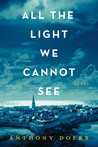
All the Light We Cannot SeeAll the Light We Cannot See by Anthony Doerr
My rating: 5 of 5 stars

There is something so genuine and honest about historical fiction novels that I love. All the Light We Cannot See is no exception. The chronology threw me slightly off-guard initially, but the puzzle pieces together towards the latter half. The short chapters left me longing for more from Marie-Laure and Werner. I became very attached to Marie-Laure quickly. Although blind, she adapts and learns to navigate effectively. Her wit and quick thinking is astonishing and admirable.

I particularly loved how Werner's and Marie-Laure's lives are connected; yet, they both do not know of the overlaps and only meet briefly.

Science and technology play a key role in the plot development. If you are interested in science theory and scientific history, this book is for you. Doerr weaves the two beautifully together while telling a touching story of WWII.

View all my reviews

Saturday, January 3, 2015

The Book ThiefThe Book Thief by Markus Zusak
My rating: 5 of 5 stars

I love stories that are told from an unconventional perspective. In this case, Death is the narrator. Zusak puts a very interesting spin on Death, even sarcastic and humorous at times. It puts a lighter spin on a emotionally heavy historic time period.

View all my reviews

Friday, December 19, 2014

Books and Scientific Research Publications

Many of my friends don't enjoy reading unless necessary. They'd prefer spending time watching a film adaptation, if available, or resorting to other activities instead. I constantly hear "I don't have time to read" or "It's too boring." Personally, reading has been a very rewarding solitary experience. I follow at least a dozen book-based blogs on tumblr and can spend hours at bookstores. I read while I eat. I read when I wait for a tardy friend. I read when a meeting starts late. I read when I have awkward hour-long gaps between classes. There are small time slots sporadically laid out in my schedule that give me the option to delve in a chapter here and there, and I love it. This is just some motivation for non-readers who can befriend beautiful words from a raconteur and potentially have a life-changing experience from giving yourself a chance to interact with the text.

(Side note: I started a phase of binge reading 12 days before the end of my final exams this fall quarter and read three books total by the time my exams ended. Sometimes I really wonder where I find all the time to read so much, but it really is my primary method of de-stressing in such a pressuring few weeks.)

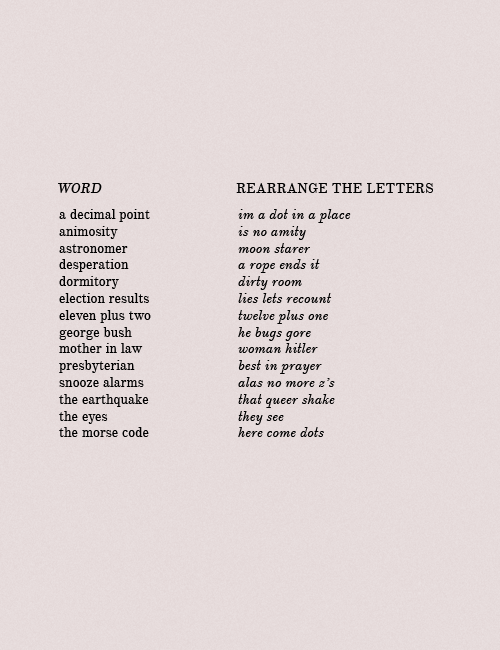
Words are truly phenomena all on their own. I stumbled upon this while browsing tumblr the other day:

That's pretty mind-blowing.

However, there is one writing format that I find difficult to enjoy, and also sheds light on why the science community seems so disconnected from the general public. In my mineralogy and structural geology courses, I spent a good amount of time dissecting articles from scientific journals. I came to two very contrasting conclusions:
  • I have a much higher appreciation for the work that goes into scientific research. The procedures and in-depth studies take an advanced level of expertise and dedication to reach a sound understanding from the hypothesis. 
  • Scientific journal publications are extremely difficult to comprehend. Even as a student who is interested in the geosciences, I found myself very distanced from the text.
Reading these research publications made me feel the vital need for more science communication and interactive methods to bring about more comprehension for the seemingly chimerical scientific research.

There are many science writers who are brilliant at their craft; Michael Pollan and Kristin Ohlson are some of my favorites. However, their work simply cannot be compared with research journal publications. The nature of the works is far too different. The target audience for each is also different, which can qualify the contrasting styles. However, Pollan and Ohlson are not firsthand science researchers. They are the ones who do their fair share of interviewing and comprehend the latest understandings in science research and experimentation and publish coherently structured and beautiful books for the public to read. We need more Pollans and Ohlsons.

I am absolutely in favor of reading no matter the book genre or medium of reading (kindle, paperback, or hardcover? Everyone has their own preference), but I am realizing the general sway away from reading about science. A couple months ago, I told my roommate that I actually enjoy writing; my roommate, who is an engineering student, blatantly told me that the furthest I will get with anything science-writing related is publishing research articles. Is this the mindset that accompanies science? This perspective must change.

Monday, November 10, 2014

"Quiet: The Power of Introverts in a World That Can't Stop Talking" by Susan Cain

I can say without any doubt that this book resonates in an uncanny way. Maybe I read it at the right moment - a moment when I felt like I lost an understanding of my identity, when I felt like I needed all the alone time in order to recharge appropriately.

Susan Cain presents a plethora of historical moments, research, and personal experiences to present the dilemmas and challenges introverts face in a world that values extroversion. I am reminded that my desires for being reflective, gritty, and conducive in less stimulating environments is perfectly fine. I shouldn't feel guilty for turning down the huge group dinner. It's absolutely acceptable to avoid the crosswalk if I'm not in the right state of mind to interact with other people. 

I've grown up knowing how vital it is to my sanity to have my own space. The amount of personal space and tranquility I have in my physical surroundings is directly proportional to my level of comfort and productivity. Susan Cain reminds me that it's all OK for me to request for others to be more quiet - to respect my need for privacy - to let me have some time on my own to brainstorm and reflect. 

Some of my favorite quotes from "Quiet," 

"Soft power is quiet persistence. The people I'm thinking of are very persistent in their day-to-day, person-to-person interactions. Eventually, they build up a team." 
What a beautiful quote to remind me of how pursuing a dream, a passion, or even curiosity will show great soft power through grit.

"Anyone can be a great negotiator...and in fact it often pays to be quiet and gracious, to listen more than talk, and to have an instinct for harmony rather than conflict." 
I've certainly learned the importance of listening over speaking in numerous situations. This quote deserves to be framed in every classroom as a child is growing up - the power of listening is so much more potent than that of babbling. 

"Maya, for her part, sits curled up at the periphery of her group, writing her name over and over again, in big block letters, as if to reassert her identity. At least to herself." 

"If you find something that arouses your passion or provides a welcome challenge, you forget yourself for a while. It's like an emotional vacation." 

Monday, October 20, 2014

"There is no one more courageous than the person who speaks with the courage of his convictions."

- Susan Cain

Saturday, October 18, 2014

2 Big Lessons from this past year

As I delve deeper into my undergraduate studies and life, I am learning to acknowledge my happiness. We've all heard it: humans are emotional creatures and tend to dwell on the setbacks and hardships while seldom acknowledging the moments when we are truly happy and content.

To (rather unfairly) simplify a painful and very complex personal experience: about a year ago, my collegiate life was heading downhill. I felt as if everything were slowly falling apart. Daily rivers of tears accompanied the extreme frustration with school. It all spiraled into emotional instability, and it's still difficult for me to admit that almost all of this unhappiness stemmed from academics. I became so disinterested in the academic content that I eventually lost motivation to learn and put in effort. Coupled with the disinterest were high-level challenges from the abstract subject matter of my major at the time. I put academics before all (after all, the ultimate goal in college is to receive a degree in something that I desire to specialize in). This top priority turned from intense curiosity and passion to depression and self-loathing, obvious portents of a need for massive change.

Just a few days ago, I began to acknowledge my happy moments. That led to realizing that I am actually a pretty awesome person - and I had never felt this awesome before because I failed to recognize my victories, especially the small ones that are easily overlooked. I then began to fathom why I am able to feel so much happier now, and this falls under two big umbrellas.

(1) My previously dominant emotional struggles and self-loathing now give me strength.
I've always known that hardships allow people to feel much more prepared for future challenges. However, what surprised me most were my recent acknowledgements of "Wow, I know I would not be this happy and, most importantly, grateful in my new major (more generally, academic department) had I not suffered immensely a year ago." I feel strongest and most self-assured when I am genuinely happy. So many times, I had wished that all the disparities had never happened, but I can't disparage what happened a year ago. Because I was completely downcast and inconsolable, I am now able to sincerely appreciate the smallest moments of bliss and euphoria that cross my path, because hey - almost anything beats those days of self-loathing.

(2) I surround myself with both "right and wrong" people, and both are equally important.
Friends come and go, but sometimes, it can take an entire year or more to understand someone on an authentic level. I discovered that some people are not who I thought they were, and others are so much more compassionate and kind than the person I first knew.

I have two really kindhearted roommates. We all look out for each other, provide mutual support, and live off a code of blatant honesty. This has allowed us to cut out the nonsense and pointless squabbles that may accompany living with close friends. They are my sisters. They can see right through me and know that the truth is exponentially more powerful than any lie. Surprisingly, when I first met them both, I had never thought that I would meet them again.

I have also grown closer with someone I met about a year ago. I am forever indebted to this individual. He and I met through his roommate and surprisingly, our friendship launched through sarcastic humor and a stuffed animal wombat. Throughout most of last year, we exchanged countless laughs; I always loved his company. It was not until the start of this school-year when I came to terms with how much I respected his commitment to his word, ability to not only hear but also to listen, open heart, and generous nature. He is a person whose actions speak louder than his words - and they represent him in a positive light. It is so refreshing to know that there are individuals who value what is important to both themselves and others, and know how to listen. And slowly but surely, I'm learning to become a better listener as well.

After dealing with combative people, gratefulness comes so much more naturally. I am learning so much about myself and the person I strive to be.

More importantly, I am able to acknowledge myself and my own happiness.

Tuesday, September 23, 2014

Autumn is here!

Today marks the start of Autumn, my favorite season. I am lucky to live in Los Angeles, a city with tolerable weather and 4 beautiful seasons. With the falling leaves, gentle winds, and pumpkin spices, Autumn seems to create the coziest atmosphere that provides the perfect fusion of city life and the natural world.
Photo from one of my favorite seasonal blogs, cozyautumnchills

Autumn also brings about natural shades of light brown, dark green, tinted yellow, and dark orange. These color combinations imitate a warm, intimate forest. I would love living in a home partially built of brick and wood. The tan, brown, and dark red colors are serve as great backgrounds for blooming houseplants.

I spent 90% of my day at the local shopping center smelling pumpkin candles. Pumpkin spices, here I come.. love me some sugared doughnut flavored smells.


I am so excited to bake some pumpkin-spiced breads and add pumpkin flavors to my coffee and tea. I drank some Pumpkin Brulee samples today and my taste buds are still on fire.

Sunday, September 21, 2014

Unwind: Botanical Journeys & Autumn Warmth

Transcendentalism has always fascinated and impressed me. (Ralph Waldo Emerson and Henry David Thoreau author most of my favorite quotes.) Today, as Apple fanatics desperately camp out and fly overseas for the iPhone6, transcendental themes such as simplicity and self-liberation from the materialistic and technologically reliant society we currently reside in are gentle reminders of the resources we gratuitously take from Earth.

As I'm preparing to move to my apartment, this past week has been mostly consisted of shopping for basic apartment needs: pots and pans, extra utensils, oven mitts, cutting boards.. you name it. I felt as if my mind and body were working nonstop. This weekend, my mom and I decided it was time to sit back and take a breather. We took a trip to the Descanso Gardens, and while this day trip is far from the isolation and self-sustaining ways of the transcendentalists, it still felt so refreshing to be in a more naturally raw setting than the bustling and urbanized city.

Some colorful flowers still bloom in late summer - Descanso Gardens
The ample space and small guest capacity during my visit likely enhanced my appreciation for the gardens. Earlier this summer, when I went to Victoria and visited the Butchart Gardens, I felt slightly swamped by all the other tourists and lack of walking space, which downplayed my fascination with the blooming gardens. This time, at Descanso, the absence of human traffic was the opportune day to stroll around the various gardens (my favorite is the Japanese garden) and also enjoy the gift shop ambiance.

Ceiling embellishments near the Pagoda of the Japanese Garden - Descanso Gardens
Descanso Gardens - the Japanese Garden (L) and the Rose Garden (R), still blooming a bit!

Back in June. The contrasting but surprisingly less-crowded view of one of my favorite spots - Butchart Gardens

The biggest surprise of the day was witnessing four deer in a queue gallop across a trail and up the hill towards the Boddy House (below). They were no more than 20 feet away from me. It looked just like a wildlife documentary where I am positioned with a camera, waiting for the perfect capture moment. Sadly, they moved too quickly for me to snap a photo!

The Boddy House - E. Manchester Boddy is the figure behind the creation of the Descanso Gardens


My imagination kicked in when I was in the gift shop, a very cabin-like building that smelled like autumn and trees. I spent at least an hour just browsing through all the books (a gentle reminder to myself that real books are still more heartwarming than my Amazon Kindle) about nature, food, and happiness. Such books with beautiful illustrations and bindings are must-own physical copies. If I replaced the merchandise in the gift shop with all my personal belongings, I would be in paradise.

It's a bit fleeting to think of decorating my temporary apartment to a dreamy cabin-like setting, but I can still start mothering succulent plants when I move in!

Book heaven at the Descanso Gardens gift shop

Succulent plants in the Descanso Gardens - similar ones are sold in the gift shop

My day-trip to the Descanso Gardens really gave me some time to practice mindfulness. My mind is constantly running - sometimes regretting the past, but usually planning for the future. We all need a moment to pause and take in what is around us, cherish the resources and beauty of planet Earth, and ultimately, unwind for a bit. For me, peacefully residing within a natural setting for a day is the best way to unwind.

Thursday, September 18, 2014

Lessons from a new (and unexpected) friend

In addition to my trip to Alaska and Canada, another great highlight of summer was working as an office assistant at a home services company in my town. As someone who is slightly fidgety and constantly moving, I wasn't very accustomed to long hours of sitting. However, I gradually adjusted and learned to sit for longer periods of time in the office while coordinating real estate inquiries among agents, buyers, and sellers. I became familiar with many of the agents, who loved the presence of a collegiate young adult and grabbed every chance to give me personalized advice about my future and career. Of all these interactions, I grew closest with the office bookkeeper, a lovely woman named Dolores.

On my first day of work, Dolores was waiting for me at the front desk with a toothy smile. She gave me an office tour and a thorough training for all my tasks. Each subsequent day I showed up to work, she'd come greet me with the same bright, toothy smile and tell me a bunch of stories. I'd hear about what she ate for breakfast with her husband, how she painfully fell down a staircase and bruised her knee, her get-togethers with friends, family life, previous jobs, generation differences... the list goes on and on. Initially, I thought of this as a mentor-like relationship. Dolores is like a sweet grandmother watching out for the new employee in the office. However, as the days went by and the conversations continued, I noticed how much more comfortable I became. It wasn't as if I were speaking with a superior or an adult; I felt as if I were talking to one of my peers.  

Even at her age, Dolores is able to find joy in small things. She is happy to pick up her granddaughter from school. She loves making special breakfasts with eggs and English Muffins. She savors great moments with her friends, even visiting them out-of-state. She may be a grandmother, but she's still so youthful. I'm reminded of the guarded person I tend to be and remember that I have to learn to say yes more often. Some of the friendships with other females can be the greatest friendships I will form, and one day, like Dolores, I will be able to cherish the longevity of great friendships I may form with more smiles and more yes. When I'm older, I hope to be as bubbly and wonderful as Dolores is.

Receiving a small farewell gift from her on my last day of work was so heartwarming. Her gift was also extremely thoughtful. She got me some handy and portable Avon products that I can use whenever I am on campus. Little actions like these can truly make someone feel extremely touched. She even wrapped it in a cute pink tissue paper held by a beautiful bag with a yellow ribbon plastered on.


"May new friends always cherish you the way your old friends do....
May you always find the joys you're dreaming of." 
-Excerpt from Dolores' card

Dolores was the friend I did not expect to make this summer. But she has been such a gift, and I am so grateful to have met her. I can't wait until I have my own paycheck to be able to treat her out to a delicious meal and share more laughs.

Sunday, September 7, 2014

I'm in love with Pocket

I generally don't download apps on my smartphone. The ones I have downloaded in the past have long been deleted because of lack of use or inefficiency. I have tried downloading various organizational tools, calendars, notes, games... and I have resorted to "remove app" for most of them. I felt like a waste of a smartphone user. I already try to use my phone as little as possible (considering the technologically addicted society we are in now where technology is often abused, I didn't want to become the next young adult who spends all her free time checking social media). But then I stumbled upon Pocket while doing some random reading on the internet. This glorious application makes me feel smartphone-worthy.

As someone who reads a lot of internet content, Pocket is the perfect app for me to appropriately label, organize, and gather the articles I would read later. I get most business, environmental, and health news from feeds I follow on twitter and tumblr. In the past, I would favorite everything I would read later, but it was so incredibly difficult for me to even remember to revisit my favorites. I had 100+ favorites within two weeks, and I barely cut it down to 50 several weeks later. The system was clearly inefficient.

Luckily, with Pocket, I am able to easily save articles from my twitter feed to read for later and add appropriate labels. The labels allow me to get a better sense of what may have gone through my mind when I decided to save the article in the first place. I'm able to filter through what I prefer to read first based on customizable tags.

A sneak peek "in my Pocket"

It's easy to "archive" articles after reading them - and I can still refer back to them whenever I wish. Sharing articles with others via Pocket is very convenient as well; I can also highlight/quote anything intriguing in what I'm reading and share it.

Most importantly though, Pocket is accessible offline. Cheers for places with no WiFi; I can still catch up on the news if I save interesting articles on my Pocket feed!

For someone who doesn't use mobile apps very often, I'm surprised at the positivity I have felt with Pocket. This is truly an app that makes life so much easier, especially for avid readers. Pocket has helped my self-discipline as well. I no longer feel the urge to carelessly binge read through all the articles that show up on my twitter and tumblr feeds; I can save them in my accessible Pocket for later and read at my own pace without worrying about losing the original article location.

I have a little faith in my survival in the appreciation of this ever-growing wireless generation. Thanks, Pocket!

Saturday, August 23, 2014

Katty Kay & Claire Shipman's "The Confidence Code" and Sheryl Sandberg's "Lean In"

Ever since summer classes ended, I've taken on a 9-5 part-time job that involves a lot of sitting and idleness. The most natural response for me was to read, and I have never charged my Kindle Paperwhite this excessively before. Of the last four books I've completed, three of them were nonfiction. I now have a lassitude toward fiction. As creative and imaginative as writers are with fiction, fiction makes me sad for obvious reasons.

I surprised myself as I completed each nonfiction work, especially since I used to be addicted to sci-fi and fantasy themed novels (can we say Harry Potter, please). Nonfiction has motivated me towards active self-improvement and diverts my attention towards real life as I learn about the real human condition. Brain Rules, The Confidence Code, and Lean In each provided unique perspectives about social issues prominent in the United States today. The former two especially use a scientific storytelling method to while discussing social implications. All three have strong and salient plots that educate and engage me. I couldn't help but wonder why professors don't assign these sorts of books for class textbooks. Textbooks are made to solely inform; these books are both empathetic with the human condition and informative while backed with extensive research studies to expand upon their points. Brain Rules especially had challenging but plausible suggestions for improving work life and the education system to create a better learning environment, and I loved Medina's proposals.

I'm glad I read The Confidence Code and Lean In back-to-back. They complement each other perfectly. Merely reading them already boosted my confidence level significantly. Throughout college, I've experienced several moments of extreme self-esteem drops (roll through some old posts and it'll make sense). Despite interminable personal lectures, emotional outbursts, and excessive journaling, I never seemed to get out of my I-am-going-to-suck-at-life shell that I refused to leave these past two years, especially as a female in a male-dominated field. Just last month, I was lying on the floor in my room and complaining to my mom about how I felt like I had no future. There were some legit first-world problems. Am I overloading my work for this coming school year? What activities do I participate in this time? What do I do after I graduate college? What if no man I like ever wants to date me, which means what if I'm single forever and never married? Am I still afraid of academic failure despite all I've gone through?

Hearing stories from three women who have experienced defeating moments themselves and learned to stand back up encouraged me more than any pep talk a friend or parent could give. It strikes me as hilariously sad how I would hear the exact same advice told in everyday language from someone I know and be unable to implement it, but read the advice in books published by reputable individuals and suddenly feel slightly braver. Here are some of my favorite moments from The Confidence Code and Lean In:


Mastery refers to the process and progress, not perfection.
"Perfectionism inhibits achievement."
Confidence is leaving your comfort zone and taking action. Do it.
Courage is a critical partner to confidence.
Overthinking, people pleasing, and the inability to let go of defeats are confidence killers.
"Dare the difference."
"Fortune favors the bold."
"What would you do if you weren't afraid? Go do it."
"The upside for painful knowledge is so much greater than the downside of blissful ignorance."

"Success is making the best choices we can...and accepting them."

"I truly believe that the single most important career decision that a woman makes is whether she will have a life partner and who that partner is. I don't know one woman in a leadership position whose life partner is not fully - and I mean fully - supportive of her career. No exceptions."


It strikes me that these concepts are widely accepted yet forgotten. It took two entire books to instill a different mindset within. I don't have enough self-compassion. I strive for perfectionism not because I want to be the very best at what I do, but because I always falsely believed that what I did wasn't good enough. Sheryl Sandberg suggests adopting both a long-term dream and a shorter, say 18-month plan. When coming up with these, set goals that have both "focus and flexibility," she emphasizes. It is then when I come to realize that my goals are either too out of my reach or too doable. There wasn't something appropriate for me to work towards. (But of course, in my head, it all had made sense initially.)

These past few weeks, I've voluntarily done things I usually don't do - broke a little bit of my routine actions - and it feels great. These don't even have to be big, daunting changes; they just have to be small things that I don't usually take the effort to try doing. Initiating to drive the freeway to be a better freeway driver so my dad doesn't feel the need to yell while I'm emotionally struggling in the car. Cooking and experimenting with new foods. Working out first thing in the morning at 6am. Asking questions that I may have been afraid to ask before.

At the end of the day, I learn how to better ignore other people's opinions and just keep going. Confidence and being unfazed by other irrelevant opinions come hand in hand. Slowly but surely, I'm getting there.

Thank you Katty Kay, Claire Shipman, and Sheryl Sandberg. Your words are indelible and have left a great, positive impact. 

Sunday, August 17, 2014

Everyone should go read "In Defense of Food" now


To my own surprise, I've recently been reading a lot of nonfiction (that's another story) and I officially deem Michael Pollan one of my favorite science writers. Although In Defense of Food is the only work of his that I have read, it is extremely eye-opening and thought-invoking. What are we really consuming in Western society? How can we go about to better understand what is actually in the food and produce we purchase?

Pollan emphasizes how consumerism-based marketing and the food industry have evolved from selling raw, whole foods to advertising products based on nutrient break-down. It is frightening how often we see "low-fat" and "low-carb" exploding in front of our eyes on packaging labels, especially when science has clearly shown that there is really no one sole component of a food that deems it healthy. It is the food as a whole which dictates its benefits. Take margarine, for example, which turned out to be the trans-fat royalty that was engineered by humans to supposedly be a "better version of butter."

As a result, Pollan suggests that we all consume and buy "real food," which has the following criteria:
  • No more than 5 ingredients
  • Has no unfamiliar ingredients
Here's my question: can I even find anything in my local supermarket that meets these requirements, apart from fresh produce? I can meet the two criteria at a farmer's market, but what about at the evenly-priced supermarkets down the street?  

As Westerners become busier and increasingly fed up with family and work matters, they have significantly less time to cook with whole, raw foods. Therefore, they resort to processed products with the interminable and foreign list of ingredients next to the nutrition label. Furthermore, consumers who purchase these foods are completely unaware of its origins after extreme processing. What about the procedure of making processed foods that last for years on store shelves? The condition of the soil that produce grows in? The quality of the foods that the meat we eat is being fed? Consumers are becoming increasingly distanced from the food production process and its taking a serious toll on Western society health. Interestingly enough, though, this article addresses the possible change that can take place in such a seemingly impossible force - if consumers begin purchasing foods from more reliable, firsthand sellers ("Shake the hand that feeds you," Pollan says), then the market will gradually shift to support this demand. 

Pollan has encouraged me to start growing a garden with vegetables and fruits. Reading this book has already increased my appreciation for food, and horticulture should only cement it. I'm planning on reading The Omnivore's Dilemma soon, another one of Pollan's great works. 

It's time to savor and better understand the food the enters our bodies.

Friday, August 8, 2014

What I Learned & Loved from The Great Santini

It took me a while, but I finally finished Pat Conroy's The Great Santini late last week. It's one of those books where I couldn't pick up the momentum very quickly. Usually, these books tend to be disappointing, but Conroy's work took a different turn. The most climatic and suspenseful moments occurred in the latter half of the story, but without the essential background, character motivation, and tone set throughout the first half, the ending would not have evoked such an ambivalent reaction from me.

The only other novel I read that is revolves around a military-based theme is Tim O'Brien's The Things They Carried, so I was very unfamiliar with the context surrounding military family life. It was thought-evoking and eye-opening to have detailed descriptions of military children's reactions and dialogue. We especially get to see how Ben Meecham, as the oldest child, deals with and faces the pressure and expectations from his father, Bull Meecham (aka "The Great Santini").

1. The Unfiltered Dialogue and Descriptions
Conroy does a great job of keeping his characters real to the point where their voices are the only sounds occupying my mind. Bull Meecham's inexorable pride and vulgarity, and Ben's inherent fear yet simultaneous hatred and admiration for his father are straightforwardly addressed to a level where I felt uncomfortable (in the best way possible as a reader; it's the kind of uncomfortable writers strive for). My discomfort emanates from the power behind Conroy's honesty. There were far too many times when I thought, "Oh no, definitely didn't mean that," and the text is simply laughing at me and saying "Oh yes he did!"

Conroy is also extremely open in describing sensitive subjects, such as the racial conflict and gender imbalances. In particular, a frightening rape scene written with absolutely no strings attached was the most emotionally unsettling. I am reminded of how prominent these issues still are today - if we have access to so many personal accounts, one would think that humankind should know better than to continue such bigotry.

2. Sarcasm, Comedy, and Laughable Insults
Conroy made me realize the need for comedy even in the most daunting and sensitive situations. While I may cringe because some characters make morosely sarcastic comments, the Meecham family found the need to use a mixture of sarcasm, comedic comments, and insults in order to free themselves from a rigid family structure. Mary Anne has the best hits in the family. She calls Ben "feces face." She tests Bull's patience on the phone with incestuous comments. She threatens others through the claim of committing suicide while inserting seemingly cruel jokes about how nobody will miss her because of her unattractive appearance. In hindsight, these comments may seen indicative of a hurtful and inconsiderate person. However, Mary Anne used sarcasm as a coping and defense mechanism for her insecurity in being a marine's daughter who is self-deprecating in comparing herself with her mother's beauty. Underneath the tough marine family facade, the Meechams use exaggerated and laughable role-play games in order to cope with the nature of the impermanent marine lifestyle. 

3. Who do I root for?
Conroy creates his characters so that it's difficult to completely invest in a single one of them. It is natural to side with a member of the Meecham family and identify any antagonists, but within the Meecham family, each character possesses countless admirable qualities and flaws. The Meecham family dynamic is constantly changing; their interactions and reactions often surprised me. It's easy to feel sympathy for all of them at a certain point, yet cringe due to the nature of the obscene words and choices.

4. Cyclical Storytelling
I was expecting a maximal climax point in the novel, but Conroy chose to tell a series of short, small stories with small climaxes, all of which revolve around very similar themes. Bull's marine parties, Ben's basketball games and cryptic excursions with Sammy, Toomer's business.. each conflict kept me in extreme suspense, and the desired result isn't what usually plays out. However, the cyclical storytelling method kept the military family theme in-tact and set the stage for the ending.

Highly recommended book. Conroy is a gifted storyteller, and I certainly plan on reading another one of his works soon.