Navigation

Saturday, February 16, 2019

"Behave": Genes, Environment, and Culture

I'm about halfway through Robert Sapolsky's "Behave", and I find this book fascinating. The witty bounce-off between comical language (especially in the footnotes) and data-backed evidence lightens the heavy topic of complex and downright confusing human behavior.

A topic from "Behave" that I have been perusing is gene-environment interactions, a topic strongly related to the age old debate of nature vs. nurture. How pivotal of a role do our genes play in explaining human behavior and preferences? How much do my genes determine my strong love for pancakes? 

There are two terms here that Sapolsky defines and, as he admits, are highly unintuitive: 
If genes strongly influence average levels of a trait, that trait is strongly inherited. If genes strongly influence the extent of variability around that average level, that trait has high heritability.
Sapolsky gives the example of height variation in a plant species with three gene versions. Version A will grow to be 1 inch tall, B to be 2 inches tall, and C to be 3 inches tall. In this scenario, the differences in height is completely determined by genes, and is thus 100% heritable. However, consider that this plant species always has leaves at the base closest to the roots, with an occasional anomaly of a plant with leaves at the top near the flowers. The trait of low-lying leaves would be highly inherited with low heritability; the genes predict the placement of leaves and don't explain the anomalous difference of leaves growing at the top of the plant.

So what drives differences, and how much of it is actually driven by genetics? I found Sapolsky's point about environment crucial: if you only study the gene in a particular environment, you fail to observe how the gene works in other environments. As expected, genes work differently in different environments. Furthermore, studying the gene in multiple environments decreases the influence of heritability, and suddenly the influence of genes on plant height is less due to genes and more influenced by environment. The actual heritability of a trait is highly context-dependent. Imagine the intricacies of studying human behavior in the context of environment, where there are infinite types of living environments, lifestyles, and traumas.

Related to gene-environment interaction is a topic that I took more personally: collectivist vs. individualist culture (or East Asian and American cultures, respectively). There are three scenarios in the book, which I used to "determine" how "Asian" and "American" I am:

1) Americans are more likely to remember when they influenced someone, while East Asians will remember times when someone influenced them. 
I'm 50-50. I have strong admiration and memories of mentors who have had significant impact on my decisions for my career and path forward, but I have equally strong memories of times when friends and acquaintances would remark on something I did to help them through challenges.

2) Which two go together? A monkey, a bear, and a banana. 
I instinctively said monkey and banana, associating a monkey with eating a banana. According to research, the cultural differences cause Americans to process this situation categorically; the monkey and bear go together since they are animals. East Asians, however, think about the relationship between a monkey and a banana; the monkey will need to eat the banana to nourish its body and survive.

3) When looking at a picture, what do you notice first? The scene or the person in the middle?
I tend to notice the person in the middle of a scene. Generally, Americans will look towards the center of the photo first, while East Asians look holistically at the entire photo.

What I found utterly fascinating is the environmental and ecological influence of rice on collectivism. Rice is the staple of East Asian food, and its harvesting requires extensive cooperation beyond family boundaries to successfully build and maintain rice irrigation systems. Rice harvesting is not a solitary activity. And on the topic of heritability and environment: a gene variant responsible for extroversion and impulsive activity occurs in 23% of Europeans and European Americans, but only 1% in East Asians. Collectivist rice farming societies trended against this variant as rice domestication progressed.

I couldn't help but think about my parents and how their actions strongly reflect collectivism. My mother makes lunch for my father every single day, and it is almost the exact same lunch: romaine lettuce with tomatoes, avocado, mushroom, many other vegetables, an egg, with bagel and oatmeal on the side. She always said it was natural for her to do so and she never had to think twice about putting together a meal for him. My father never complains about the meal, despite it almost being the exact same lunch every day.* I assume this is part of his "collectivist mindset", where he understands that every person contributes to the overall well-being of the family in some way. In turn, he does a lot of the cleaning in the house and likes to maintain garden and plants in the yard, keeping our family's living space clean.

My parents do all that without consciously dividing up tasks. To me, it seems like they naturally fell into those roles because they were aware of the individual contribution needed to create a healthy, communal environment for the family.

Genes, environment, and culture - the interplay among these three must somehow create a unique blueprint for every individual's behavior.


* If it were me, I might have resorted to making my own lunches because the individualist in me wants to take charge of my meals and have something other than nutritious, healthy salads daily.

Wednesday, January 10, 2018

Hunger, by Roxane Gay

I have been silent about my story in a world where people assume they know the why of my body, or any fat body. And now, I am choosing to no longer be silent. I am tracing the story of my body from when I was a carefree young girl who could trust her body and who felt safe in her body, to the moment when that safety was destroyed, to the aftermath that continues even as I try to undo so much of what was done to me.

- Roxane Gay, Hunger


Empathy is lacking in this world, especially in online spaces. The internet has become one of the cruelest and most bigoted places. Anybody can hide behind a computer screen and create an anonymous social media account to harass others. Creators can put up a screen-grabbing thumbnail and garner views with offensive, and insensitive content.

Twitter is an excellent example of an online space where strangers can tweet you vile and insulting things in a couple hundred characters. On YouTube, users can leave paragraphs of rude and hurtful comments.

Roxane Gay is frequently harassed on twitter. People offer her unsolicited weight loss advice, insult her body, and send her condescending tweets.  In Hunger, she chooses to speak up about her body, her insecurities, and her struggle with her identity.

Hunger is a raw and honest story which must have required infinite amounts of courage to even decide to write. Gay says that her life can easily be divided into a before and after of the day she was raped at 12 years old. She perceived her body as weak and unprotected, and believed that the more she ate and the larger she became, the safer she was. She struggles between feeling this protection and feeling devalued in a world of thin privilege. 

Gay reminds us that this society values thinness and rewards it. She writes about her concern with grocery shopping under the public eye, getting bruised from armchairs on planes, and sitting on the edge of her chair and using as little weight as possible during a public interview. She writes about cooking disappointing ravioli from Blue Apron instructions. She writes about how muted she was in describing her hunger to her parents, and how she could not bring herself to show them how broken she felt inside. 

Hunger is a gift to literature. In no way is Gay ever obligated to explain her past and the evolution of her body to the public, but she bravely shares her ongoing struggle with her body and navigating society as a fat woman. 

Sunday, March 29, 2015

The Inner Dilemma of a Coffee-Lover

It's the end of winter quarter 2015, and for the first time, I've overindulged in coffee and dessert during finals week. My sudden lax in self-control both intrigues and frightens me. Furthermore, coffee from external vendors near UCLA are quite costly. We're talking Starbucks and Peet's Coffee, where small-sized drinks average $3-4.

Back in high school, I actively took part in campaigns that urged consumers to purchase fair-trade products such as fair-trade chocolate and fair-trade coffee. Fair-trade sets a just compensation for farmers who produce goods that are purchased in first-world countries. For example, coffee is one of the most traded commodities, but many coffee-producing farmers are in a cycle of poverty due to labor exploitation.

So the question is, where does all the money go for all the high-priced coffee at chains such as Starbucks? Most of the money we pay goes directly to coffee exporters who take advantage of the situations and use profit for their personal gain. Fair trade USA, even though more expensive than their non-fair trade counterparts, claims that
Our mission is to enable sustainable development and community empowerment by cultivating a more equitable global trade model that benefits farmers, workers, consumers, industry and the earth.

In my generation, fair trade is also relatively unknown and rather inaccessible. There's always a part of me that truly enjoys the delicious aroma and taste of well-brewed coffee, but another part of me says to be more minimalist and concerned about what happens behind the scenes. This internal battle takes place all the time whenever I decide to go out and have a good time with friends. Eating meat is bad for the environment, they say. You're contributing to terrible employee treatment, they say. Stop drinking coffee when it has such a terrible colonial history, they say.

So where do I draw the line?

Sunday, January 4, 2015

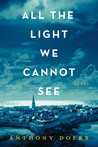
All the Light We Cannot SeeAll the Light We Cannot See by Anthony Doerr
My rating: 5 of 5 stars

There is something so genuine and honest about historical fiction novels that I love. All the Light We Cannot See is no exception. The chronology threw me slightly off-guard initially, but the puzzle pieces together towards the latter half. The short chapters left me longing for more from Marie-Laure and Werner. I became very attached to Marie-Laure quickly. Although blind, she adapts and learns to navigate effectively. Her wit and quick thinking is astonishing and admirable.

I particularly loved how Werner's and Marie-Laure's lives are connected; yet, they both do not know of the overlaps and only meet briefly.

Science and technology play a key role in the plot development. If you are interested in science theory and scientific history, this book is for you. Doerr weaves the two beautifully together while telling a touching story of WWII.

View all my reviews

Saturday, January 3, 2015

The Book ThiefThe Book Thief by Markus Zusak
My rating: 5 of 5 stars

I love stories that are told from an unconventional perspective. In this case, Death is the narrator. Zusak puts a very interesting spin on Death, even sarcastic and humorous at times. It puts a lighter spin on a emotionally heavy historic time period.

View all my reviews

Friday, December 19, 2014

Books and Scientific Research Publications

Many of my friends don't enjoy reading unless necessary. They'd prefer spending time watching a film adaptation, if available, or resorting to other activities instead. I constantly hear "I don't have time to read" or "It's too boring." Personally, reading has been a very rewarding solitary experience. I follow at least a dozen book-based blogs on tumblr and can spend hours at bookstores. I read while I eat. I read when I wait for a tardy friend. I read when a meeting starts late. I read when I have awkward hour-long gaps between classes. There are small time slots sporadically laid out in my schedule that give me the option to delve in a chapter here and there, and I love it. This is just some motivation for non-readers who can befriend beautiful words from a raconteur and potentially have a life-changing experience from giving yourself a chance to interact with the text.

(Side note: I started a phase of binge reading 12 days before the end of my final exams this fall quarter and read three books total by the time my exams ended. Sometimes I really wonder where I find all the time to read so much, but it really is my primary method of de-stressing in such a pressuring few weeks.)

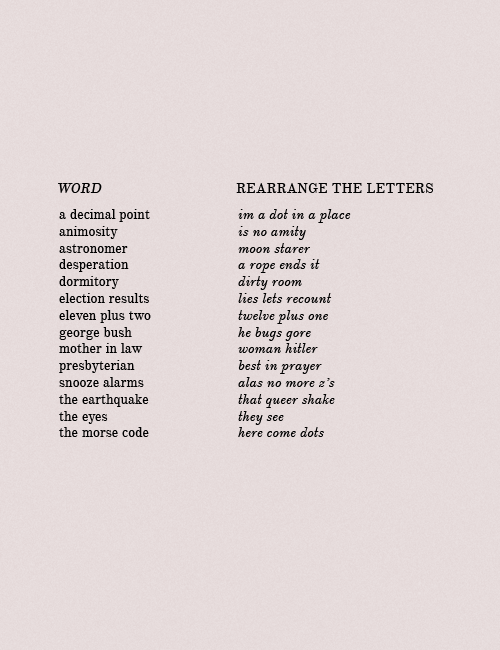
Words are truly phenomena all on their own. I stumbled upon this while browsing tumblr the other day:

That's pretty mind-blowing.

However, there is one writing format that I find difficult to enjoy, and also sheds light on why the science community seems so disconnected from the general public. In my mineralogy and structural geology courses, I spent a good amount of time dissecting articles from scientific journals. I came to two very contrasting conclusions:
  • I have a much higher appreciation for the work that goes into scientific research. The procedures and in-depth studies take an advanced level of expertise and dedication to reach a sound understanding from the hypothesis. 
  • Scientific journal publications are extremely difficult to comprehend. Even as a student who is interested in the geosciences, I found myself very distanced from the text.
Reading these research publications made me feel the vital need for more science communication and interactive methods to bring about more comprehension for the seemingly chimerical scientific research.

There are many science writers who are brilliant at their craft; Michael Pollan and Kristin Ohlson are some of my favorites. However, their work simply cannot be compared with research journal publications. The nature of the works is far too different. The target audience for each is also different, which can qualify the contrasting styles. However, Pollan and Ohlson are not firsthand science researchers. They are the ones who do their fair share of interviewing and comprehend the latest understandings in science research and experimentation and publish coherently structured and beautiful books for the public to read. We need more Pollans and Ohlsons.

I am absolutely in favor of reading no matter the book genre or medium of reading (kindle, paperback, or hardcover? Everyone has their own preference), but I am realizing the general sway away from reading about science. A couple months ago, I told my roommate that I actually enjoy writing; my roommate, who is an engineering student, blatantly told me that the furthest I will get with anything science-writing related is publishing research articles. Is this the mindset that accompanies science? This perspective must change.

Monday, November 10, 2014

"Quiet: The Power of Introverts in a World That Can't Stop Talking" by Susan Cain

I can say without any doubt that this book resonates in an uncanny way. Maybe I read it at the right moment - a moment when I felt like I lost an understanding of my identity, when I felt like I needed all the alone time in order to recharge appropriately.

Susan Cain presents a plethora of historical moments, research, and personal experiences to present the dilemmas and challenges introverts face in a world that values extroversion. I am reminded that my desires for being reflective, gritty, and conducive in less stimulating environments is perfectly fine. I shouldn't feel guilty for turning down the huge group dinner. It's absolutely acceptable to avoid the crosswalk if I'm not in the right state of mind to interact with other people. 

I've grown up knowing how vital it is to my sanity to have my own space. The amount of personal space and tranquility I have in my physical surroundings is directly proportional to my level of comfort and productivity. Susan Cain reminds me that it's all OK for me to request for others to be more quiet - to respect my need for privacy - to let me have some time on my own to brainstorm and reflect. 

Some of my favorite quotes from "Quiet," 

"Soft power is quiet persistence. The people I'm thinking of are very persistent in their day-to-day, person-to-person interactions. Eventually, they build up a team." 
What a beautiful quote to remind me of how pursuing a dream, a passion, or even curiosity will show great soft power through grit.

"Anyone can be a great negotiator...and in fact it often pays to be quiet and gracious, to listen more than talk, and to have an instinct for harmony rather than conflict." 
I've certainly learned the importance of listening over speaking in numerous situations. This quote deserves to be framed in every classroom as a child is growing up - the power of listening is so much more potent than that of babbling. 

"Maya, for her part, sits curled up at the periphery of her group, writing her name over and over again, in big block letters, as if to reassert her identity. At least to herself." 

"If you find something that arouses your passion or provides a welcome challenge, you forget yourself for a while. It's like an emotional vacation."